
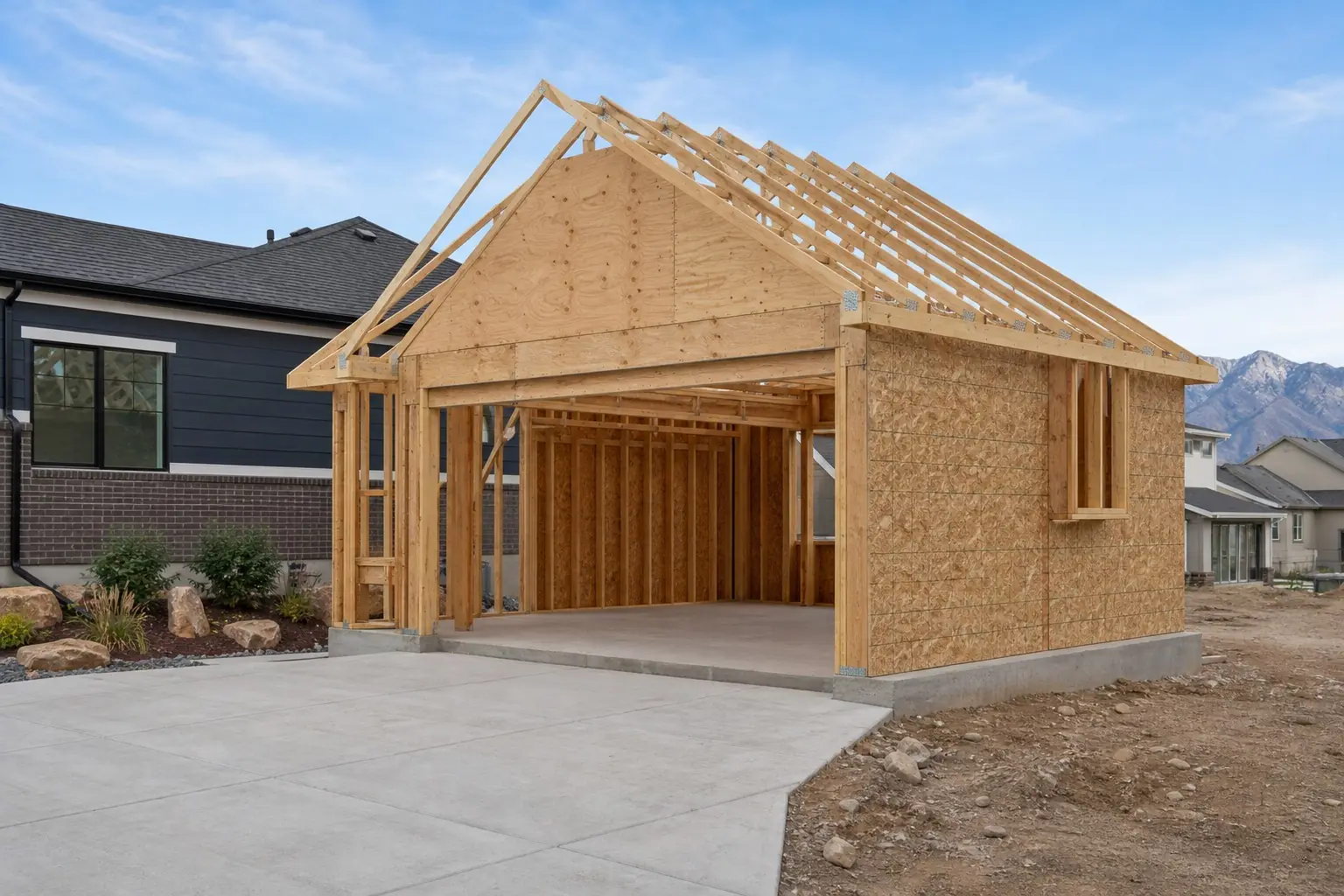
Garage cost guide
Cost to Build a Garage in Utah
This guide lists what we charge for each type of garage, and what moves the price up or down. Use it to set a budget before you call.
The short answer: price ranges by garage type
Garages in Utah range from about $25,000 for a single added bay to $180,000 for a garage with an apartment above. The type of building sets most of the price, and the details set the rest. These ranges cover the builds we do in South Jordan, Herriman, Riverton, Draper, West Jordan and Bluffdale.
| Build | Common footprint | Price range |
|---|---|---|
| Third-car addition | 12 to 14 feet added width | $25,000 to $50,000 |
| Metal building garage | Varies by span | $30,000 to $70,000 |
| Two-car detached garage | 24x24 or 24x30 | $35,000 to $60,000 |
| Attached garage addition | Sized to the lot and the house | $40,000 to $80,000 |
| Three-car detached garage | 30x30 or larger | $50,000 to $85,000 |
| Detached shop | 30x40 | $55,000 to $95,000 |
| RV garage | 16x40 with a 14-foot door | $60,000 to $120,000 |
| Garage apartment above | Garage plus living space | $90,000 to $180,000 |
Ranges are wide on purpose. Two garages with the same footprint can sit $20,000 or more apart once you add brick, insulation, a panel upgrade and a hard-to-reach lot. The sections below explain each factor so you can place your project in the range.
What drives the cost of a garage in Utah
Every garage has the same basic parts: a foundation, a frame, a roof, walls, doors and power. What changes the price is how much of each one you need and how hard it is to build on your lot.
Size and footprint
Footprint is the first number. A 24x24 garage is 576 square feet and a 30x40 shop is 1,200 square feet, so the shop has more than twice the slab, framing, roofing and siding to pay for. Size also decides the door count and the roof span, and a longer span needs heavier framing.
Foundation and frost depth
Frost depth along the Wasatch Front is 30 inches. Footings have to go below that, so even a small garage needs a real, engineered foundation. On a sloped lot or poor soil the foundation costs more, because it needs more excavation, forming or fill. A flat, open lot with good soil is the low-cost case.
Snow load and roof design
Roofs in Utah are designed for 30 to 40 psf of snow. That drives truss spacing, sheathing and tie-downs, and it is not an option to trim. A simple gable roof costs less than a roof with valleys, dormers or an upper floor. West bench lots also carry wind exposure, which adds connection hardware.
Matching the house
Matching brick, stucco or siding to the existing home is one of the largest finish decisions. Brick costs more than siding, and matching an older brick takes sourcing and care. Roof pitch and shingle color are cheaper to match, but they matter just as much for how the building looks. In HOA neighborhoods the match is often required, and some cities set their own exterior material rules. Riverton, for example, requires accessory buildings over 200 square feet to use materials already on the house.
Doors
A standard two-car garage uses two 9-foot doors. An RV bay needs a tall door, up to 14 feet, with heavier tracks and a taller header. Door style, windows and insulated panels all change the price, and so does the count.
Electrical and the panel
A plain garage needs lights and a few outlets. A shop needs far more. Welders, compressors and heaters can pull more power than an older house service supplies, which means a sub-panel and sometimes a service upgrade through Rocky Mountain Power. We size the load before we price the shop so the power cost is in the quote.
Insulation
Insulation is an option on a parking garage and close to a requirement on a shop. It adds cost for walls and ceiling, and it makes the space usable in a Utah winter. We price it separately so you can compare.
Site access and the apron
Access decides how much hand work a build needs. A narrow side yard, a locked gate, a utility line overhead or a steep driveway slows deliveries and equipment. The concrete apron adds cost too, and a wide RV turn needs more concrete than a straight run to a two-car door.
Detached garage costs
A two-car detached garage runs $35,000 to $60,000 and a three-car runs $50,000 to $85,000. A detached garage stands on its own footing, so it needs a complete foundation, four walls and a roof. That makes it simple to price, and it leaves the house untouched. It also needs enough lot: cities cap accessory building size, height and lot coverage. For example, Draper limits all detached accessory buildings to 8 percent of the lot. See the Draper page for the math.
Attached garage and third-car addition costs
An attached garage addition runs $40,000 to $80,000, and a third-car addition runs $25,000 to $50,000. Attached builds share a wall with the house, but the tie-in costs real money. The new roof has to meet the old one, the foundation has to line up and the exterior has to match. The most common way an addition gets expensive is a roofline that needs a new valley or a brick match that is hard to find.
RV garage costs
An RV garage runs $60,000 to $120,000. A 16x40 bay with a 14-foot door is the common size. The range is wide because door height, depth and finish all matter, and a tall building also faces tighter city height limits and bigger snow and wind loads. Plan the concrete approach as part of the cost, not an afterthought.
Shop costs
A 30x40 detached shop runs $55,000 to $95,000. Electrical and insulation drive the range. A basic shell with lights and outlets sits low, and a heated, insulated shop with a large sub-panel sits high. The slab also matters, since a shop floor carries lifts and machines.
Garage apartment costs
A garage with an apartment above runs $90,000 to $180,000. It is the most variable build we do. It adds a floor system, stairs, plumbing, heating and finishes on top of a full garage, and its feasibility depends on city rules. South Jordan, for example, requires accessory dwelling units to sit at least 10 feet from every property line. Check the rules before you budget.
Metal building garage costs
A metal building garage runs $30,000 to $70,000. It goes up fast and handles wide spans, which keeps cost down. Check the exterior rules first. Some HOAs restrict metal buildings, and Riverton prohibits corrugated metal on larger accessory structures.
Where to spend and where to save
- Spend on the foundation and roof. They are hard to fix later, and Utah frost and snow punish shortcuts.
- Spend on the exterior match if you have an HOA. A building that gets rejected costs more than a better finish.
- Plan the power now. Running a bigger sub-panel during the build costs far less than adding it later.
- Save on interior finish. Drywall, paint and epoxy can be added when budget allows.
- Save on door extras. Plain insulated doors cost less than windowed or custom styles.
What a good garage quote should include
Ask every builder for a written quote that lists the scope. A solid quote names the footprint and height, the foundation type, the framing and roof, the exterior materials and the match to the house, the door count and size, the electrical scope, the insulation option, the concrete apron, and who handles the permit and the HOA submittal. If an item is missing, ask about it before you sign. Vague quotes are where surprise costs come from.
How we price a garage
We price after a site visit. We walk the lot, measure to the property lines, check access, look at the house and talk through finishes. Then we give you a plan and a price for your actual site. The ranges on this page tell you what to expect. The site visit tells you where in the range you land. See the permit and setback guide for what the city and HOA require.
Questions
Garage cost questions
How much does it cost to build a garage in Utah?
It depends on the type. A two-car detached garage runs $35,000 to $60,000 and a three-car runs $50,000 to $85,000. An RV garage runs $60,000 to $120,000, a 30x40 shop $55,000 to $95,000, and a garage with an apartment above $90,000 to $180,000.
What is the cheapest way to add garage space?
A third-car addition is usually the lowest-cost option at $25,000 to $50,000, because it shares a wall and a roofline with the garage you already have. A metal building garage, at $30,000 to $70,000, is the lowest-cost new standalone building when your HOA and city allow it.
Is it cheaper to build attached or detached?
Not always. An attached addition shares a wall with the house but has to tie into the existing roof and match the exterior, which takes careful work. A detached garage needs its own full foundation and walls. Which one costs less depends on the lot, the roofline and the finish match.
What makes a garage price go up the most?
Size, finish level and site conditions. Brick or stucco to match the house, insulation, extra electrical or a panel upgrade, taller doors and difficult access all move the number. A plain building on an open, level lot sits at the low end of every range.
Do your prices include permits?
We prepare the plans and handle the permit and HOA submittals as part of the build. City permit fees and HOA fees are set by those offices and vary, so we list them in the quote once we know your city and your plans.
How do I get a firm number?
Book a site visit. We walk the lot, measure to the property lines, check access and the house, and talk through finishes. After that we give you a plan and a price for your actual site.
Service area
Where these prices apply
These ranges cover builds in six cities in the southwest Salt Lake Valley.
Ready when you are
Get a price for your garage
Tell us the city, the type and the size. We will come back with a plan and a price range.